Eco Ninjas Badge Hats: Reframing Safety as a Shared Responsibility in Surgery
At Eco Ninjas, our focus on safety is grounded in cross-sector learning – drawing insights from industries like construction and road safety, where visibility and compliance are critical. By examining what these sectors do well and why their standards are so effective, we've been re-evaluating our theatre badge hats through the lens of behavioural design, colour psychology, and mandatory safety signalling.
The goal: to create safer surgical environments through clearer identification, shared accountability, and evidence-based visual cues.
Safety for Others, Not Just Yourself
On any building site, hard hats and high-vis vests are non-negotiable. Their purpose is clear: protect the individual and ensure visibility in hazardous environments. Compliance isn't optional – it's embedded, enforced, and universally accepted. But what if the safety measures weren't for you, but for others?
This isn't just a philosophical question – it's a real challenge in healthcare. Many safety behaviours, from infection control protocols to wearing identification, are designed to protect teams and patients, not just the wearer. Yet uptake often hinges on culture, convenience, and whether the rules are enforced.
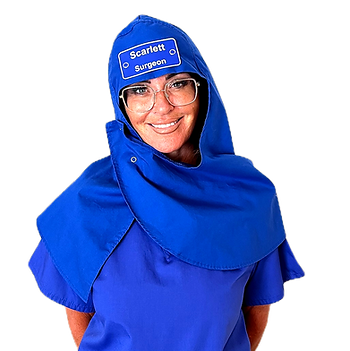
Operating theatres are high-pressure, high-stakes environments where clarity and coordination can make the difference between safety and harm. That's why we created our Eco Ninjas badge hats – designed not just for comfort or style, but for visibility, accountability, and communication.
Inspired by Road Signs, Built for Clinical Safety
Our badge hats use a colour-coded system inspired by UK road signage: Blue with white text, Yellow with black text, Red with white text, and White with black text. These colours weren't chosen at random – they're backed by decades of research into human perception and contrast sensitivity.
In surgery, where decisions are made in seconds and roles must be clear at a glance, this logic translates beautifully. Our badge hats help teams instantly recognise roles and responsibilities, reduce cognitive load and response time, minimise miscommunication and procedural errors, and support inclusivity for those with reading difficulties, language barriers, or neurodiverse needs.
Full-time staff can wear blue badges, whilst students wear white badges and yellow badges are for visitors. Team leaders wear red badges, making them stand out as the person in charge.
Learning from Construction: Visibility Saves Lives
In construction, workers wear high-vis gear not just to protect themselves, but to be seen – by crane operators, drivers, and colleagues. Visibility is a shared responsibility. It's about preventing accidents before they happen. In healthcare, the same principle applies. Clear identification isn't just helpful – it's essential.
Yet in many theatres, some staff wear patterned personal hats with flowers or pop-culture characters as a form of self-expression. While these designs add personality, they can obscure the core purpose: knowing who's who, quickly and reliably. When roles aren't visible, communication falters, accountability blurs, and patient safety is compromised.
Safety That Serves the Whole Team
At Eco Ninjas, we believe it's time to reframe safety – not just as personal protection, but as a collective commitment. Whether on a building site or in an operating theatre, visibility isn't a luxury. It's a necessity.
We're not advising to stop introductions – merely to reinforce names and roles after introductions are made, helping staff and patients not need to rely on memory recall throughout the day. Patients are scared and vulnerable; staff are busy and stressed. Introducing simple measures so everyone knows each person in the operating theatre can make all the difference.
Our badge hats are a simple, evidence-based intervention that helps teams work smarter, safer, and more inclusively. They're not just hats – they're tools for better communication, stronger accountability, and safer outcomes. So next time you see a yellow badge with black text or a blue badge with white lettering, know that it's more than just a colour. It's a signal, a safeguard, and a shared promise to put patient safety first.