
Working for a Greener NHS
Back in late April and early May of 2020, you might remember stories in the news about animals visiting cities and enjoying the freedom of a quieter world. Images of sheep walking down high streets or deer grazing near tower blocks gave some rare feel-good moments in the early weeks of lockdown. These changes, sadly, proved to be fleeting – the result of everyday life being on pause, rather than a conscious effort to rebalance our relationship with the planet.
Changing Behaviours
Climate change is beyond doubt, but we have a greater understanding than ever before of humanity's impact on the environment. In the last 20 years, we've nearly halved the amount of waste that goes to landfill. Separating paper, tins and glass into our recycling bins is second nature now. Our awareness of the damage of single-use plastic items has increased hugely, with many items now banned or carrying a charge.
For all these positive changes, the pandemic and the focus on sanitising has meant the return of single-use items. In the NHS especially, it has meant more and more pieces of personal protective equipment being used and then discarded.
The NHS and the Environment
The NHS is comfortably the largest employer in this country with over 1.3 million staff members. It's no surprise that 4–5% of our country's carbon footprint is generated by health and care services. Air pollution is linked to conditions like heart disease, stroke and lung cancer which together kill over 36,000 people annually. Taking action to reduce these emissions will save lives.
A Greener NHS
Even before the pandemic, the NHS was making sustained efforts to reduce its environmental impact. A key goal was to become the first health service in the world to achieve 'net zero' in terms of its carbon footprint by 2050. Technology has a big role to play, with remote consultations reducing emissions caused by avoidable travel.
Supply Chains
COVID-19 has meant millions more pieces of PPE being manufactured, used and thrown away. It's estimated that over 54 million masks are binned every day. Not only can they not be recycled, but they take over 20 years to break down because they contain cellulose fibres – causing harm to the environment and wildlife.
Single-Use Theatre Caps
Surgical theatre caps are made of the same material as masks and are thrown away in their thousands every week by every surgical unit around the country. Surgical units are facing the double dilemma of a shortage of supply of a product they need, but one that is costly, wasteful and harmful to the environment.
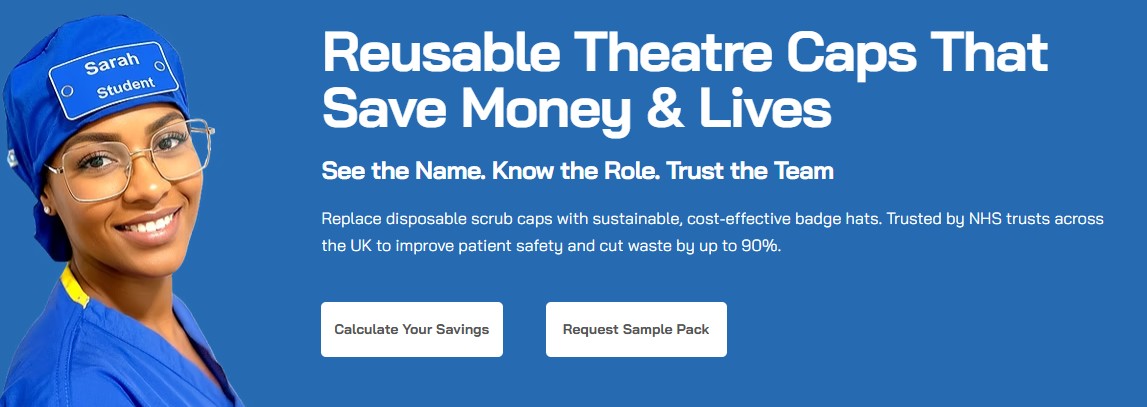
At Warwick Med, our mission is to help create a safer, greener, more efficient NHS. We produce and distribute washable surgical theatre caps that can be reused for years and meet infection control guidelines – no more bin loads of caps going to landfill every day, and a considerable saving to each hospital or NHS trust. Just 3 reusable caps per staff member, versus hundreds of single-use ones.
Named Reusable Theatre Caps
Earlier in 2020, we became involved in a campaign about moving away from disposable hats to reusable ones that carry a person's name and job title. With additional PPE, it is even harder for staff and patients to recognise who is around them in a surgical setting. This misidentification and miscommunication causes problems and impacts patients' anxiety and recovery.
Triple Benefits
We've already partnered with hospitals and trusts across the country, all of whom are reaping the benefits to patient safety, communication, their budgets, and the environment. Please explore our site, take a look at our products, and how you can take advantage of the savings and benefits they offer.