Tackling Hierarchies and Waste in Theatres
The team brief is an important part of effective team working in theatres. An innovative but simple initiative ensures everyone feels part of the team while simultaneously tackling environmental and infection control issues.
The NHS is striving to be more sustainable, moving to greener alternative products away from disposable items. Daily contributions result in millions of single-use throwaway items going to landfills. The Royal College of Surgeons has recognised that it is imperative to act collectively and urgently to address this issue, developing a Green Theatre Checklist to help drive greener changes.
Communication in Surgery
In operating theatres, confusion often surrounds the names and roles of team members – and this confusion can lead to communication breakdowns. One survey found that two-thirds of nurses and physicians cited better communication as the most important element in improving safety and efficiency in the operating room. The WHO developed a checklist that includes making formal introductions before surgery, but many staff members forget their co-workers' names shortly after these introductions.
Identification in Theatres
Everyone in theatre wears the same colour scrubs and disposable caps, making it difficult to recognise team members. This lack of visual identity can lead to confusion, heightened stress, and potential safety risks. Studies demonstrate that using the time just before skin incision to review team members' names and roles is vital. New starters find it particularly challenging, making effective teamwork even more difficult.
Theatre Badge Hats
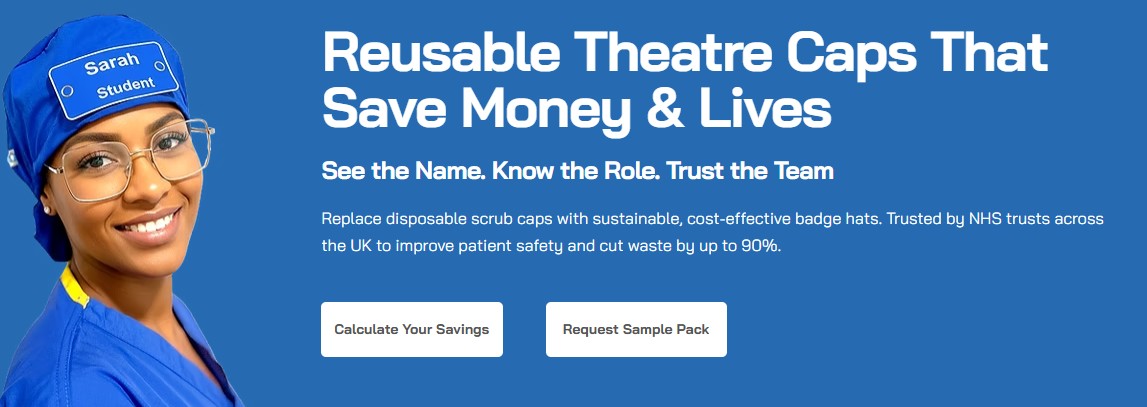
Eco Ninjas has developed a range of theatre badge hats designed with sustainability and identification in mind. The addition of easy-to-read name badges on fabric hats can have a profound effect on communication, ultimately enhancing patient safety. These hats can be laundered centrally or at home, reducing the risk of loss by the trust. Each member of the surgical team can wear the hats interchangeably, much like scrubs, ensuring everyone can be easily identified.
Hierarchical Barriers
Hierarchical structures in healthcare can lead to misunderstandings and communication failures. Staff may hesitate to speak up when they don't know each other's names. Using first names helps flatten these hierarchies – addressing someone by their first name creates a more approachable, inclusive environment where every team member feels empowered to communicate openly.
Hello, My Name Is...
For patients, entering a theatre can be daunting. The 'Hello, my name is' campaign, initiated by Dr Kate Granger, aims to humanise healthcare and emphasises the importance of staff introductions. Theatre badge hats support this initiative by facilitating clear identification of all staff. Research indicates that name badges enhance trust and improve the patient experience.
A More Sustainable NHS
Transitioning to sustainable products is vital. The Royal College of Surgeons' Green Theatre Checklist emphasises the need for reusable items to reduce waste. Transforming healthcare culture to embrace sustainability requires planning, education, and investment. Although reusables may involve higher upfront costs, the long-term benefits and savings make them a valuable investment.
Identifying theatre teams effectively can reduce communication errors and hierarchical barriers. Personalising care fosters a better culture, promoting openness and trust. Implementing theatre badge hats can serve as a simple solution – enhancing safety and sustainability in the operating room.