Badges for Safer Surgery: Knowing Who's Who Matters
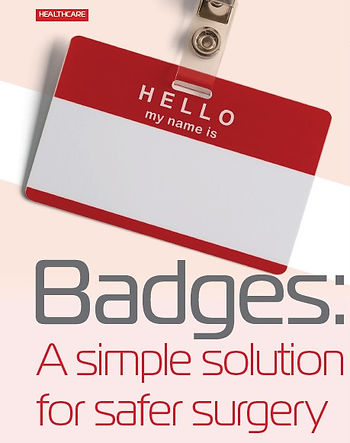
Knowing who's who in healthcare settings is key to improving the experience for patients and medics alike. The 'Hello My Name Is' badge campaign has been implemented in most UK wards and departments – but in surgery, this isn't as easy.
Clear communication is the foundation of safe, effective healthcare. The Department of Health estimates that up to 70% of adverse events are caused by miscommunication. One major reason is the lack of clear identification among healthcare professionals. When staff are easily recognised by names and roles, it not only improves patient safety but also strengthens teamwork and builds trust.
The Challenge of Memory Recall
The safer surgery checklist advocates that team introductions are made between all staff before skin incision. That's all well and good – but remembering up to 15 individuals' names and roles throughout the day can be challenging. In settings such as operating theatres, catheterisation labs and radiology, staff wear sterile gowns that cover standard name badges. Lanyards are often tucked away in pockets and it's difficult to tell staff apart.
This lack of clear identification has serious consequences. Patients may not know who to speak to, hesitate to ask questions, or direct concerns to the wrong person. Misidentification slows down care and risks patient safety.
Rita's story is just one example. After having surgery on her foot, she tried several times to tell a nurse she could still feel pain. She later learned she should have told the anaesthetist – but no one wore name badges, so she couldn't tell who was who.
The Theatre Cap Challenge
Since 2018, what began with a nurse and anaesthetist writing names on their hats has grown into a global movement called the 'Theatre Cap Challenge'. A simple glance above the eyes is all it takes to know who someone is and what they do. Writing on disposable hats evolved into embroidered hats and then onto reusable hats with detachable name badges, enabling central laundering and providing a sustainable alternative.
Maternity theatres are high-pressure settings where clear communication is vital for the safety of both mother and baby. Lack of staff identification can heighten maternal anxiety, erode trust, and discourage open communication. A 2019 report by the Chartered Institute of Ergonomics & Human Factors described the positive impact of the theatre cap initiative – one midwife found that wearing a personalised cap changed her colleagues' behaviour entirely: they addressed her by name, improving her confidence and helping her focus.
Breaking Down Hierarchical Barriers
Healthcare operates within a structured hierarchy where senior professionals hold authority over junior staff. While hierarchy is necessary for decision-making, it can inadvertently create an environment where junior staff feel hesitant to voice concerns – especially if they are unsure who is leading the procedure. A lack of clear identification makes this worse, reducing collaboration and creating missed opportunities to prevent errors.
Clear identification of names and roles improves the human side of healthcare – easing pressure on memory, helping communication flow more smoothly, and supporting safer decision-making. Patients feel more confident and involved when they know who is caring for them. Junior staff are more likely to voice concerns. Teams become more inclusive and accountable.
The Somerset Results
At Somerset Hospital, the introduction of Eco Ninjas badge hats led to a significant shift in how staff and patients experienced daily interactions. Before the rollout, only 41% of colleagues could reliably identify names and roles. After adopting the new badge hats, that figure soared to 96%.
Patients found it easier to speak to the right person. Teams collaborated more smoothly, and tension from miscommunication virtually disappeared. Staff reported a stronger sense of accountability and trust, with clearer role clarity reducing friction and increasing efficiency.
Ensuring that every healthcare professional is fully identified is a critical patient safety measure. As healthcare continues to evolve, prioritising clear and effective identification will remain vital in delivering safe, high-quality care.